
Inside Large Extrusion Blow Molding Machines
A closer look at accumulator heads, mold access, clamping arrangements and wall thickness control for large hollow plastic products.
ExploreManufacture better extrusion blow moulding machines for you.
News & insights / Technology
From parison to finished container: how material, wall distribution and cooling work together in extrusion blow molding.
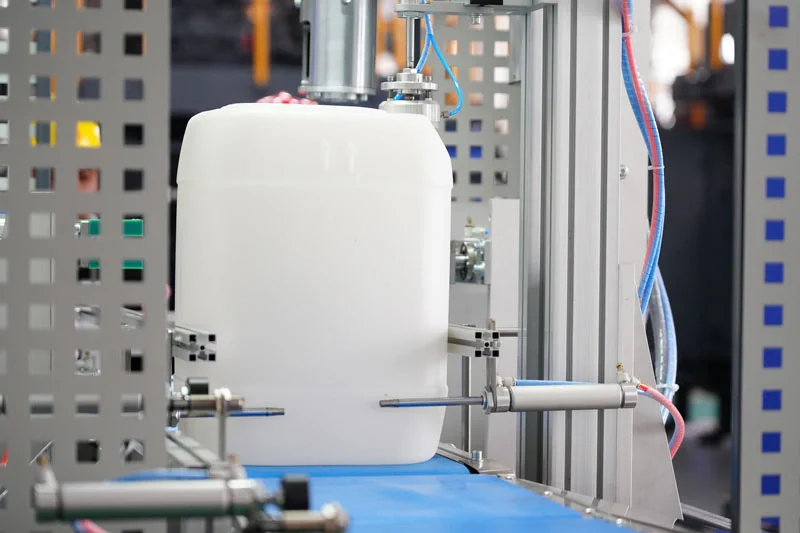
Extrusion blow molding starts with a molten plastic tube called a parison. The mold closes around it, compressed air expands it against the cavity, and cooling stabilizes the shape before removal and finishing. Bottles, jerry cans and drums are among the packaging applications.
Resin selection depends on the container’s contents, dimensions and required performance. HDPE is a common container material. Single-layer and multilayer arrangements require different equipment and tooling; define the intended structure before selecting the line.
Parison dimensions, wall distribution, inflation and mold cooling interact. The cycle includes extrusion, clamping, blowing, cooling, venting and removal. Establish product-specific settings through commissioning, then check weight, dimensions, appearance and the required container performance against an agreed specification.
Explore packaging applications →
Adapted from Tongda’s original article, published 21 September 2026.
Let's build your next production line
Share your container, material and production requirements. We’ll help you identify a suitable machine configuration.
Discuss your project