Part geometry
3D shapes, undercuts and wall distribution decide the parison and mold design.
Manufacture better extrusion blow moulding machines for you.
Large & technical parts
Accumulator-head configurations for automotive ducts, reservoirs and other hollow components, with published specifications side by side.
In short
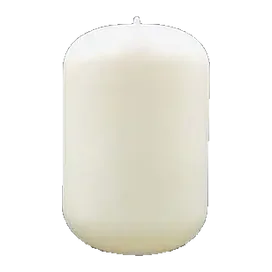
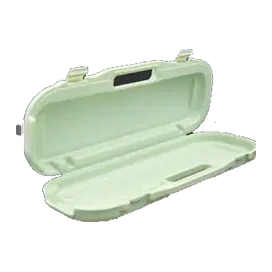
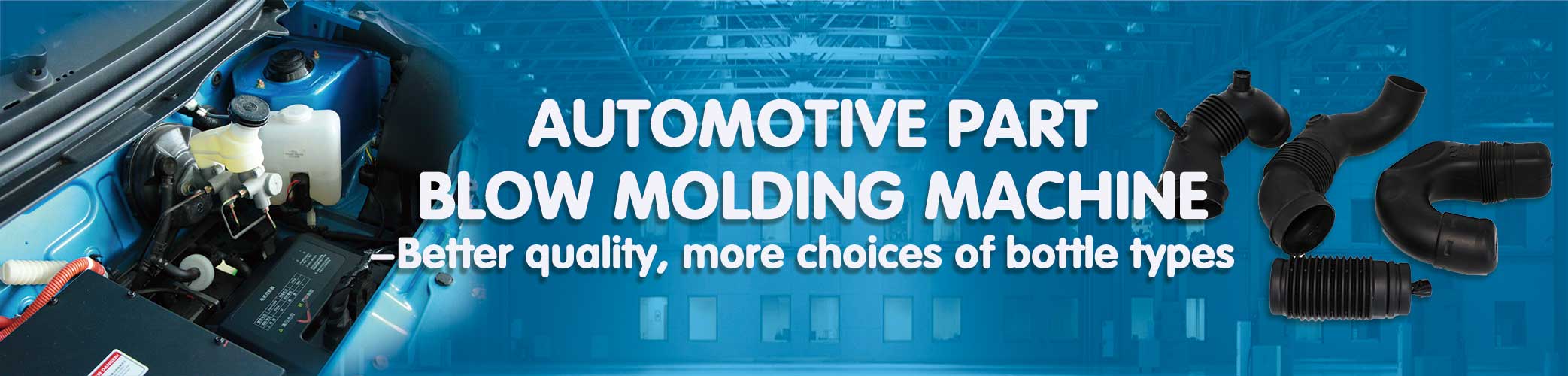
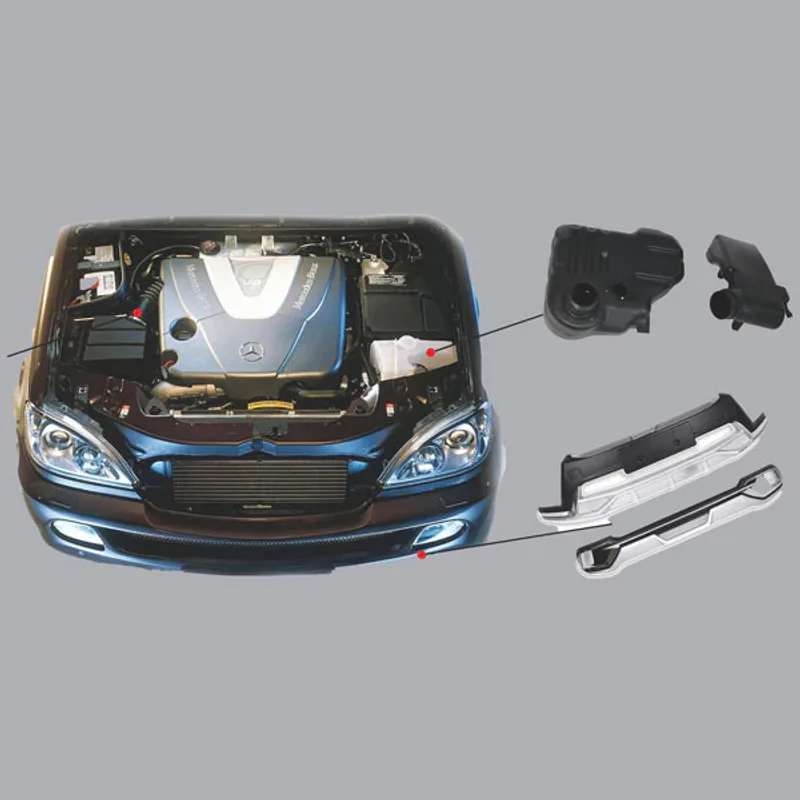
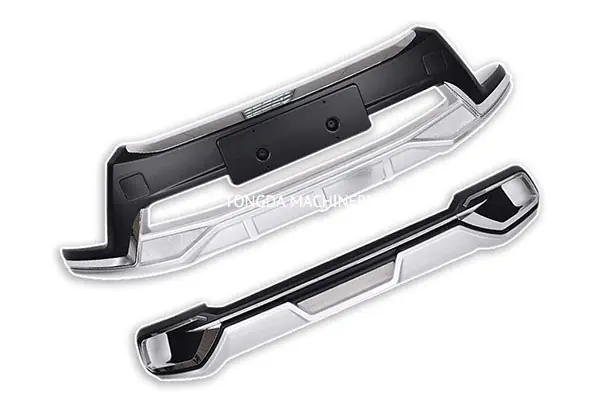
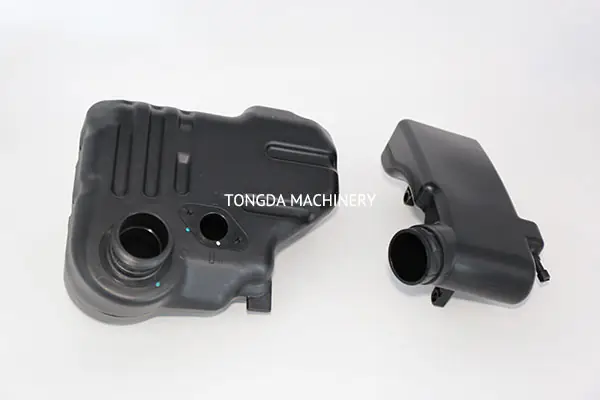
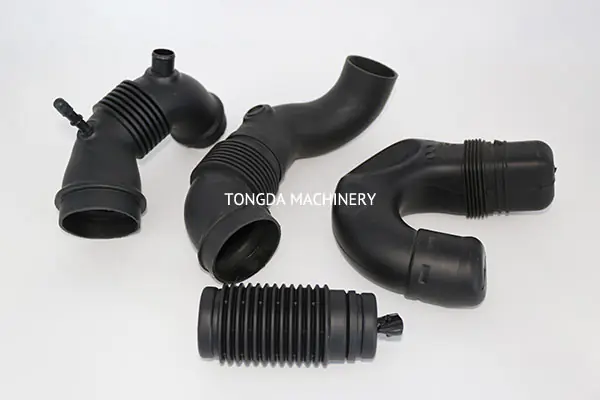
Automotive hollow parts, such as air ducts, washer and coolant reservoirs, spoilers and seat backs, are extrusion blow molded from HDPE, PP and engineering resins. Tongda TDB accumulator-head machines are configured to the part drawing and service conditions.
Specify the part drawing, resin grade, service conditions and required dimensional checks. Machine suitability and finished-part qualification are reviewed for the particular application.
Production process
Blow-molding grade resin, masterbatch and regrind are dosed to the product specification.
The extruder melts the material and the die head forms a hollow tube of controlled wall thickness.
The mold closes on the parison and compressed air forms the part against the cavity.
The part cools in the mold until it holds its shape, then the mold opens and the part is removed.
Flash at the neck, handle and base is removed; necks are cut or reamed where required.
Weight, dimensions and leak tightness are checked before labeling and packing.
Selection guide
3D shapes, undercuts and wall distribution decide the parison and mold design.
The resin grade and service temperature decide the screw and heating configuration.
Agree the measuring and fixture checks for each part.
Part qualification is carried out with the automotive customer for the specific application.
Machine configurations
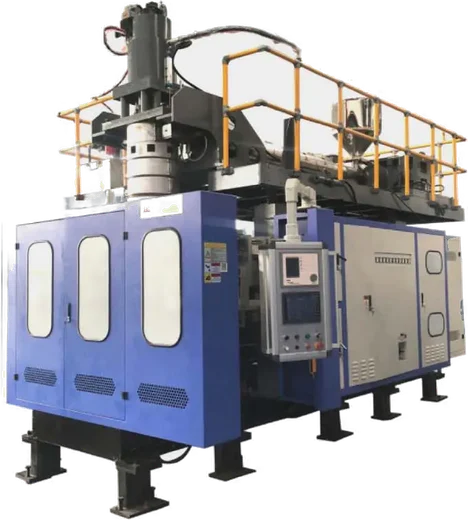
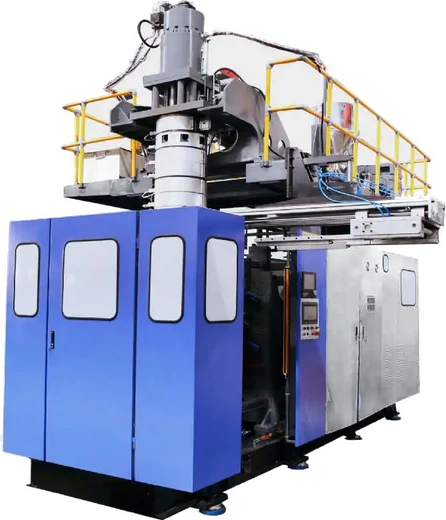
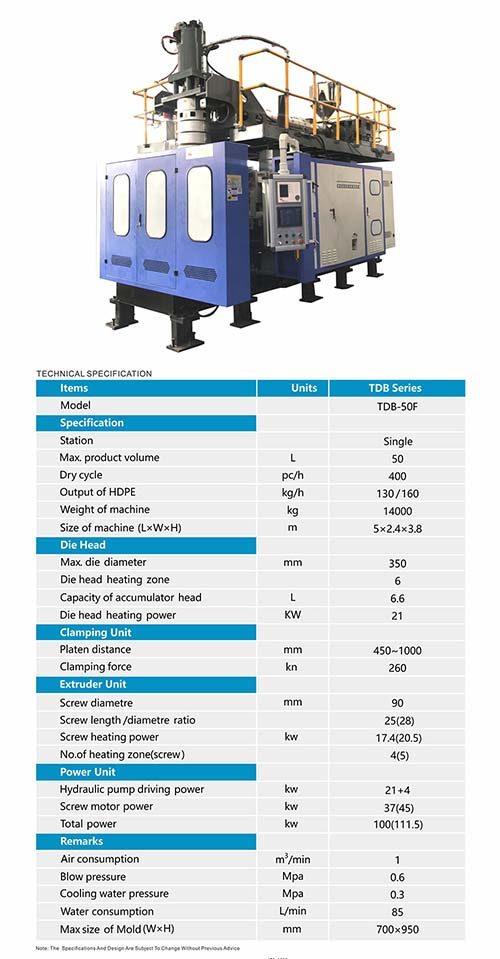
Accumulator-head extrusion blow molding for 20–50 L products, with bottom blowing and a servo motor.
Accumulator-head extrusion blow molding for 50–80 L products, with bottom blowing and a servo motor.
| Model | Stations | Max. volume | Clamping force | Screw | Total power | Max. mold (W × H) | Datasheet |
|---|---|---|---|---|---|---|---|
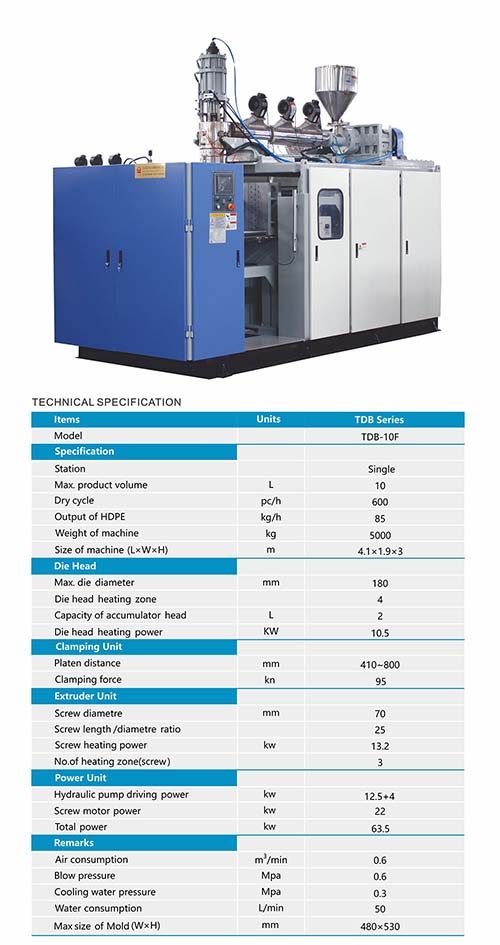
| TDB-50F | Single | 50 L | 260 kN | 90 mm | 103.9 kW | 700 × 950 mm | PDF · 2.2 MB |
| TDB-80F | Single | 80 L | 440 kN | 100 mm | 131.5 kW | 800 × 1000 mm | PDF · 2.3 MB |
Suggested starting points from the published range. The final configuration depends on your product drawing, resin, weight and output target.
Quotations, prices and project cases: Tongda automotive part machines on tongdamachine.net ↗
Machine in operation
Watch a Tongda machine producing this type of product, from parison extrusion to the finished part. For a video of a specific model or configuration, ask our team.
More machine videos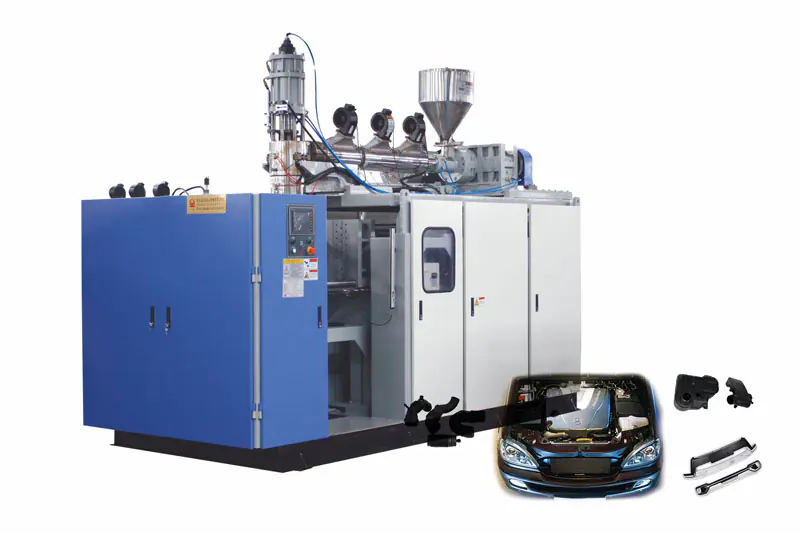
Questions from buyers
Didn't find your answer?
Ask our engineersTDB accumulator-head machines such as the TDB-50F are a common starting point. The final choice depends on the part size and material.
Some engineering resins can be processed with a suitable configuration. Share the material data sheet to confirm.
Tongda’s mold division designs and manufactures blow molds and can quote the mold with the machine.
Let's build your next production line
Share your container, material and production requirements. We’ll help you identify a suitable machine configuration.
Discuss your project