Projected area
Panel size and shape decide the clamping force and platen size.
Manufacture better extrusion blow moulding machines for you.
Large & technical parts
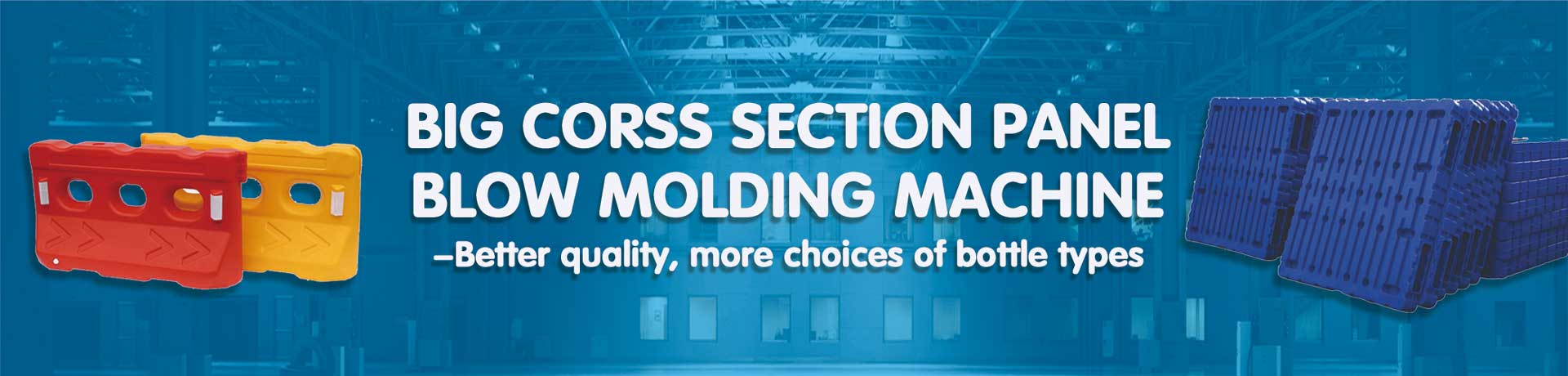
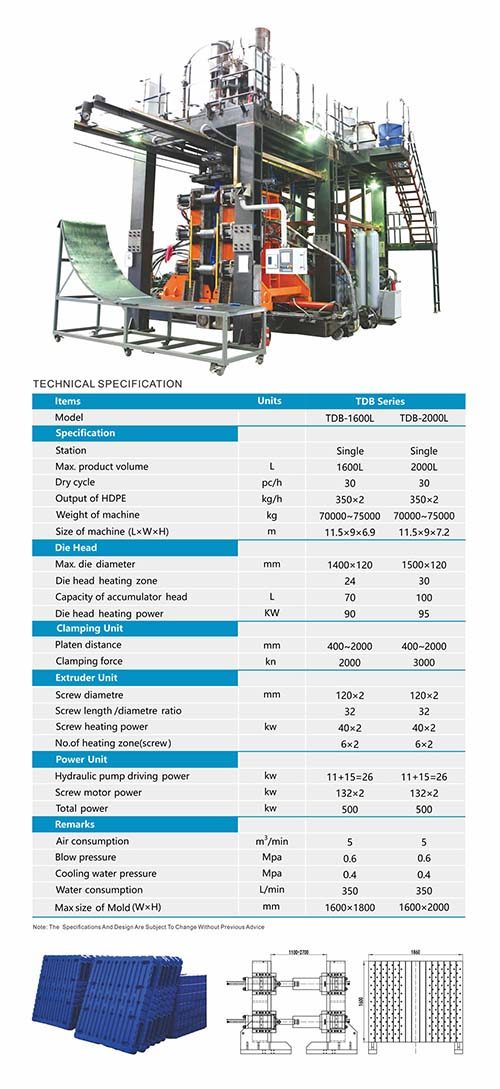
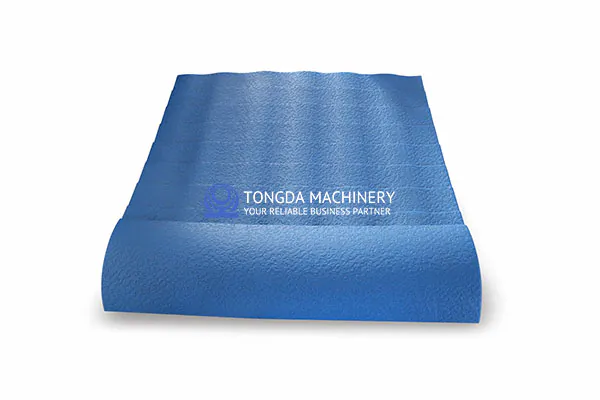
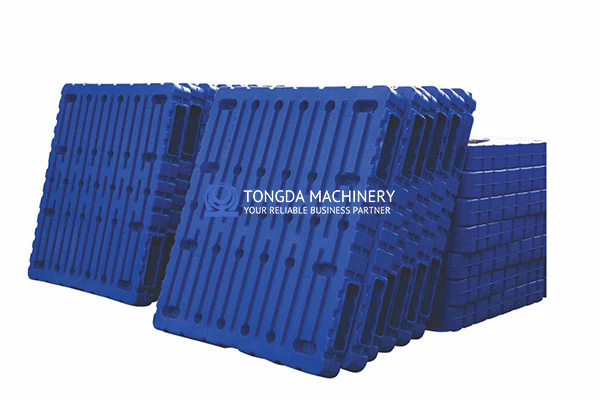
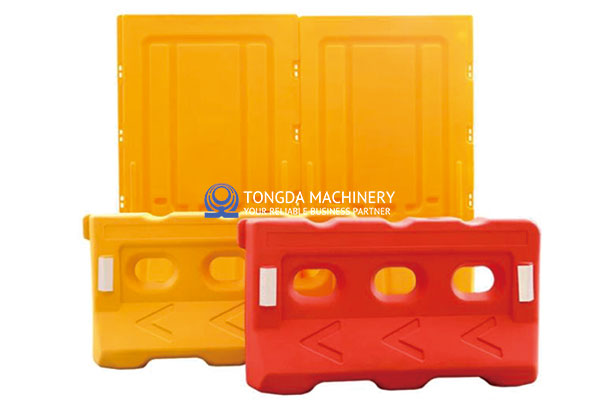
Machines for hollow panels, pallets, barriers and other products with a large projected area, with published specifications side by side.
In short
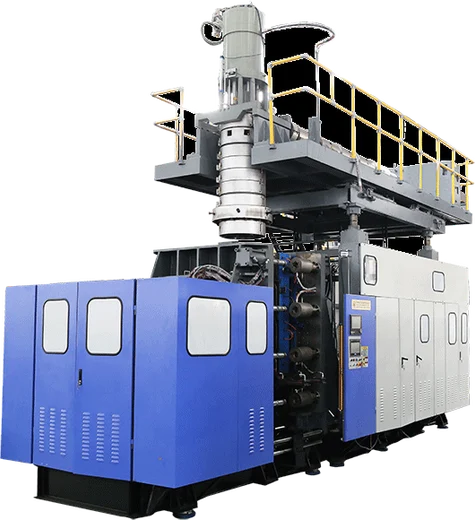
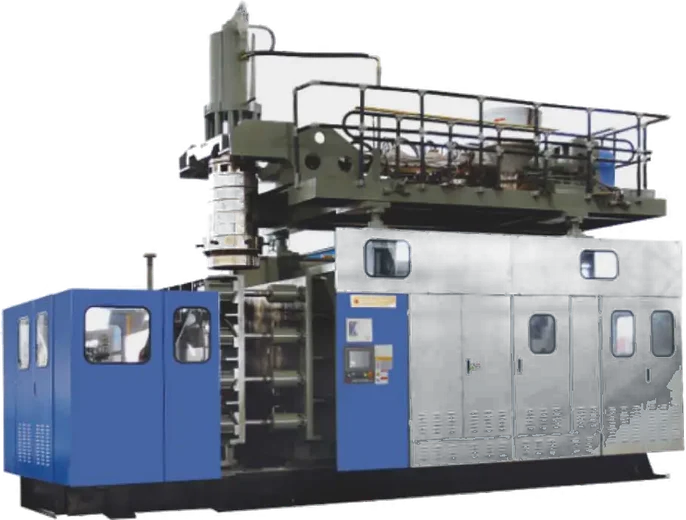
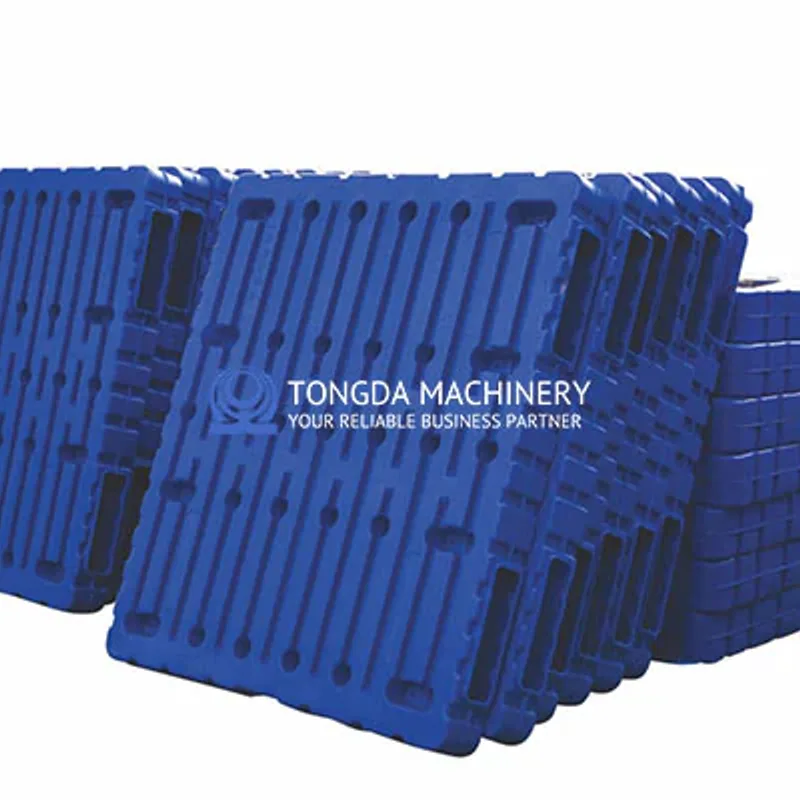
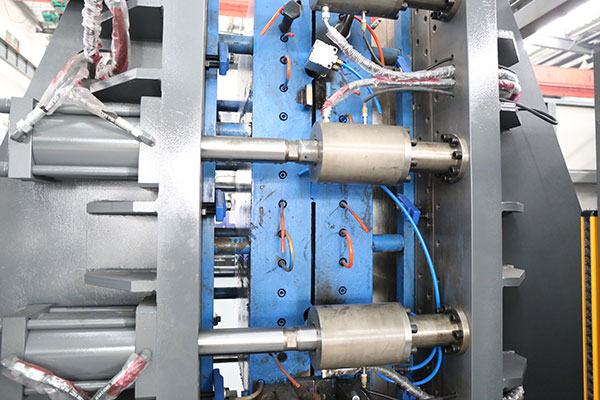
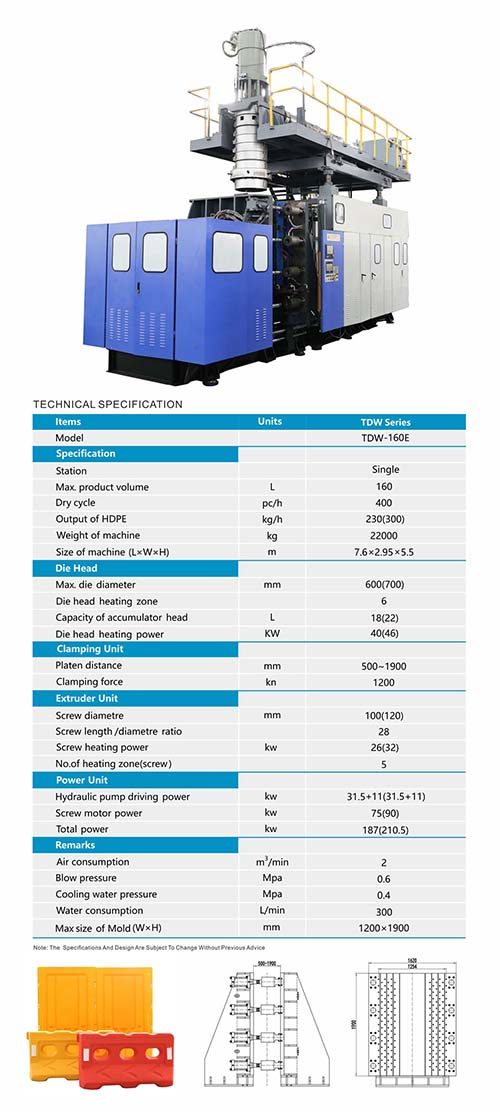
Hollow panels, pallets, road barriers and table tops have a large projected area, so they need high clamping force and a large mold envelope. Tongda’s TDW-160E uses independent mold-locking cylinders for these products.
The TDW range uses an independent clamping arrangement. Product shape, mold size, projected area and required clamping force need to be considered together, along with the finished part’s load and use conditions.
Production process
Blow-molding grade resin, masterbatch and regrind are dosed to the product specification.
The extruder melts the material and the die head forms a hollow tube of controlled wall thickness.
The mold closes on the parison and compressed air forms the part against the cavity.
The part cools in the mold until it holds its shape, then the mold opens and the part is removed.
Flash at the neck, handle and base is removed; necks are cut or reamed where required.
Weight, dimensions and leak tightness are checked before labeling and packing.
Selection guide
Panel size and shape decide the clamping force and platen size.
Parison control keeps flat faces and corners consistent.
Pallets and barriers are designed and tested for their real loads.
Ribs, inserts and kiss-offs strengthen the panel and affect cooling time.
Machine configurations
Extrusion blow molding for large panels and tall, thin hollow products, with independent mold-locking cylinders.
Accumulator-head extrusion blow molding for 120–160 L products, with bottom blowing, servo drive and a larger platen configuration.
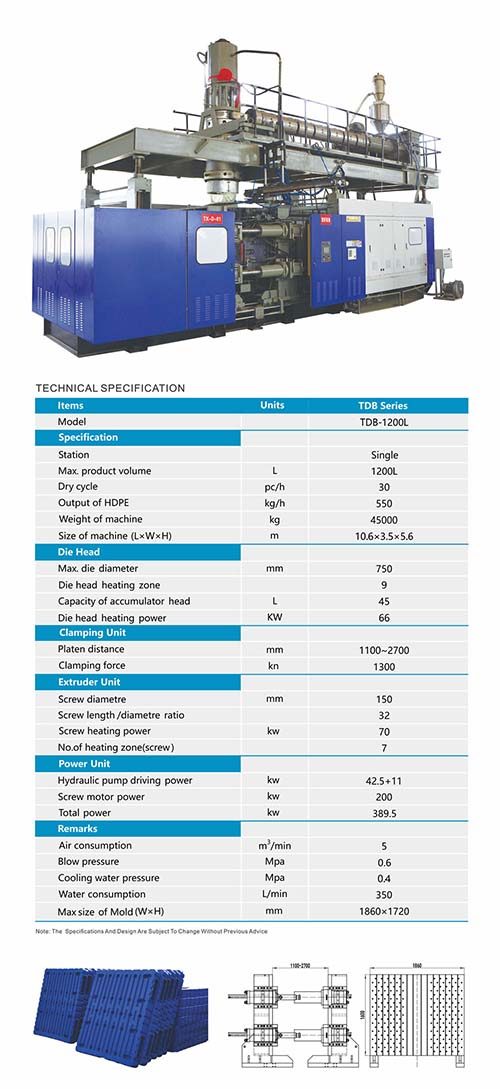
| Model | Stations | Max. volume | Clamping force | Screw | Total power | Max. mold (W × H) | Datasheet |
|---|---|---|---|---|---|---|---|
| TDW-160E | Single | 160 L | 1200 kN | 120 mm | 215 kW | 1200 × 1900 mm | PDF · 1.5 MB |
| TDB-160D | Single | 160 L | 740 kN | 120 mm | 215 kW | 1000 × 1900 mm | PDF · 2.2 MB |
Suggested starting points from the published range. The final configuration depends on your product drawing, resin, weight and output target.
Machine in operation
Watch a Tongda machine producing this type of product, from parison extrusion to the finished part. For a video of a specific model or configuration, ask our team.
More machine videos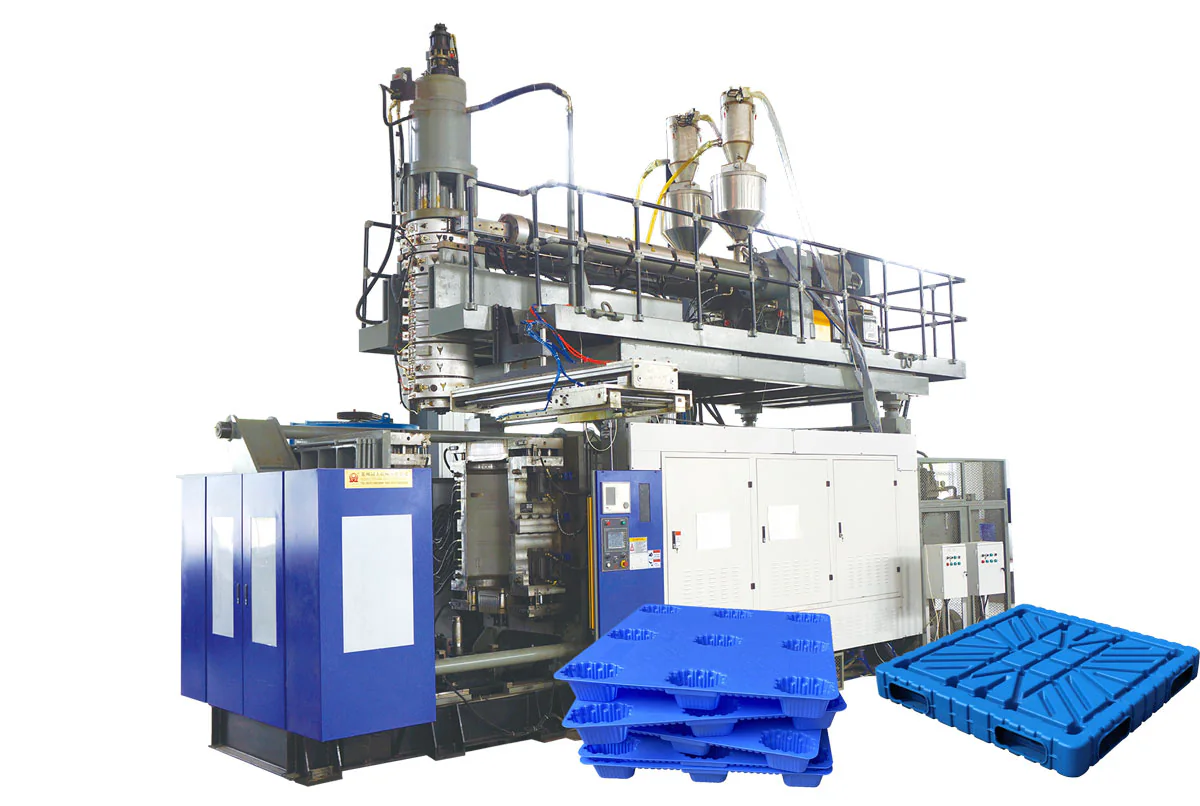
Questions from buyers
Didn't find your answer?
Ask our engineersThe TDW-160E is designed for large panels and tall, thin hollow products. The TDB-160D is an alternative for some large parts.
A large projected area produces a high opening force during blowing. The machine must hold the mold closed evenly across the panel.
Our team can review the drawing for wall distribution, ribs and parting lines before the mold is made.
Let's build your next production line
Share your container, material and production requirements. We’ll help you identify a suitable machine configuration.
Discuss your project