Part size and weight
The projected area and shot weight decide the accumulator size and clamping force.
Manufacture better extrusion blow moulding machines for you.
Large & technical parts
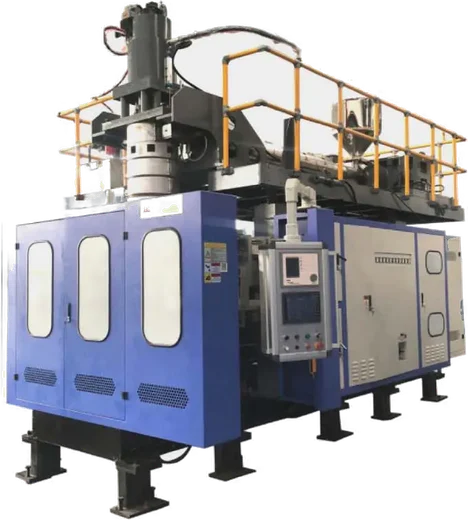
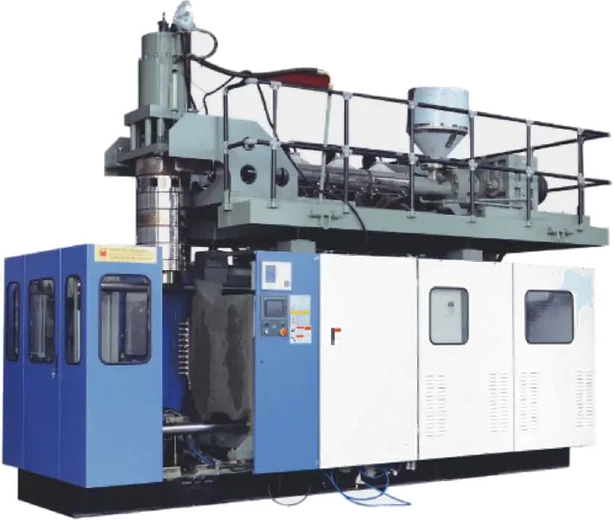
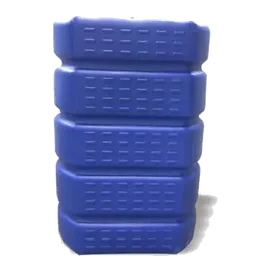
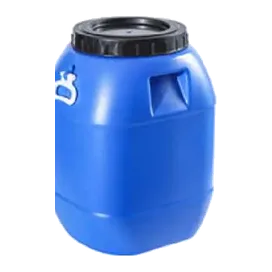
Accumulator-head configurations for ice buckets, tool boxes and other medium or large hollow products, with published specifications.
In short
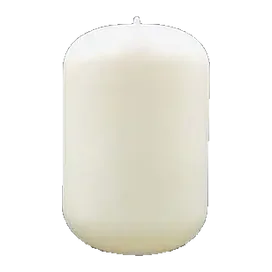
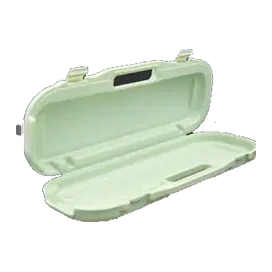
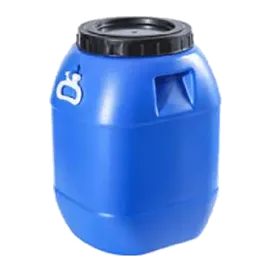
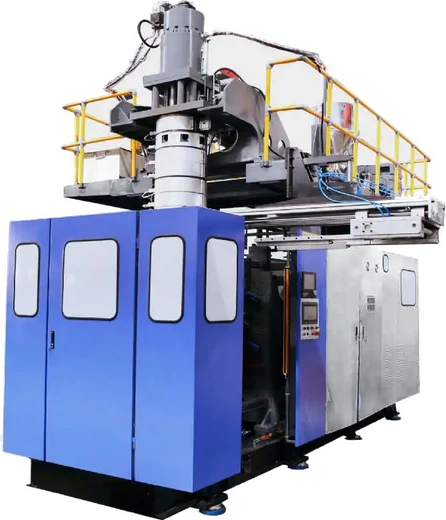
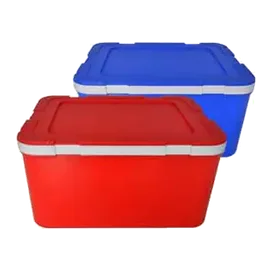
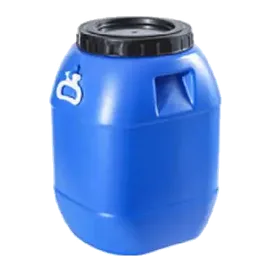
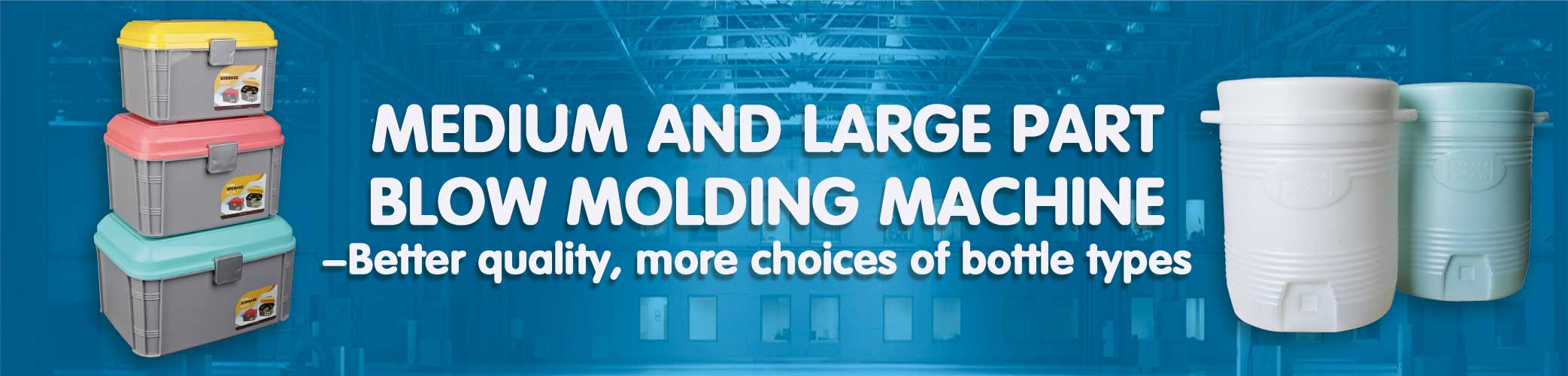
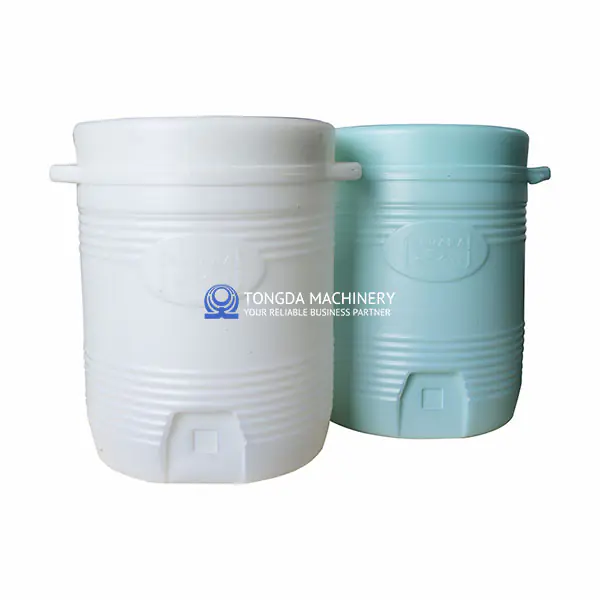
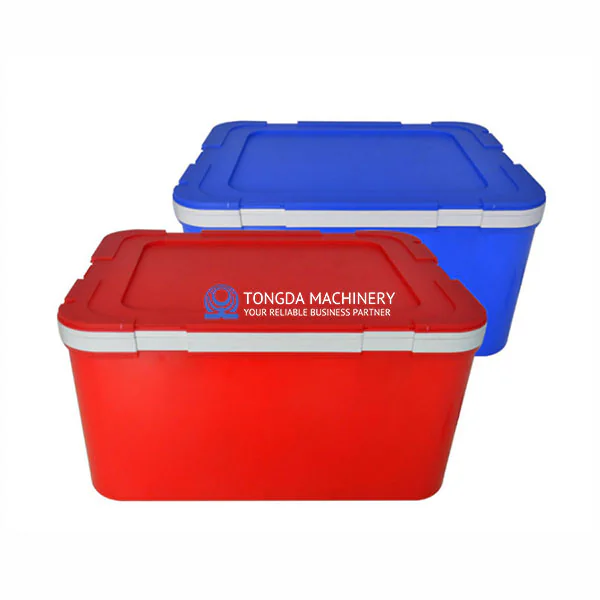
Medium and large hollow parts, such as tool boxes, ice buckets, coolers and pesticide tanks, need accumulator-head machines with large platens. Tongda TDB machines are configured around the part drawing, target weight and mold envelope.
The TDB series combines accumulator-head configurations with guided mold movement and servo drive options. Start with a product drawing, target weight and mold envelope to assess suitability.
Production process
Blow-molding grade resin, masterbatch and regrind are dosed to the product specification.
The extruder melts the material and the die head forms a hollow tube of controlled wall thickness.
The mold closes on the parison and compressed air forms the part against the cavity.
The part cools in the mold until it holds its shape, then the mold opens and the part is removed.
Flash at the neck, handle and base is removed; necks are cut or reamed where required.
Weight, dimensions and leak tightness are checked before labeling and packing.
Selection guide
The projected area and shot weight decide the accumulator size and clamping force.
Check the maximum mold size and platen opening for the part and its inserts.
Tool boxes and cases are often double-walled, which affects parting lines and cooling.
Plan deflashing, hinges and any secondary operations with the line.
Machine configurations
Accumulator-head extrusion blow molding for 20–50 L products, with bottom blowing and a servo motor.
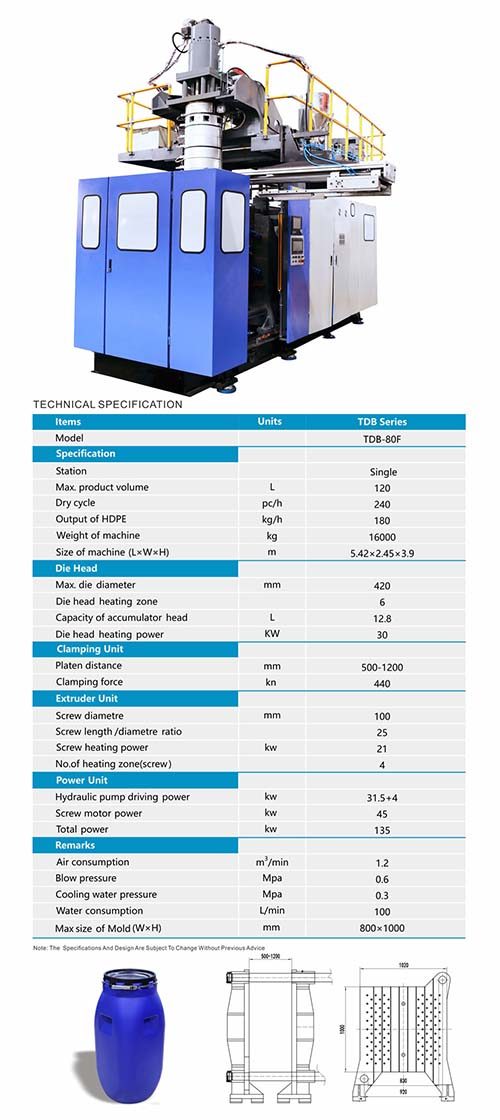
Accumulator-head extrusion blow molding for 50–80 L products, with bottom blowing and a servo motor.
Accumulator-head extrusion blow molding for 80–120 L products, with bottom blowing and a servo motor.
| Model | Stations | Max. volume | Clamping force | Screw | Total power | Max. mold (W × H) | Datasheet |
|---|---|---|---|---|---|---|---|
| TDB-50F | Single | 50 L | 260 kN | 90 mm | 103.9 kW | 700 × 950 mm | PDF · 2.2 MB |
| TDB-80F | Single | 80 L | 440 kN | 100 mm | 131.5 kW | 800 × 1000 mm | PDF · 2.3 MB |
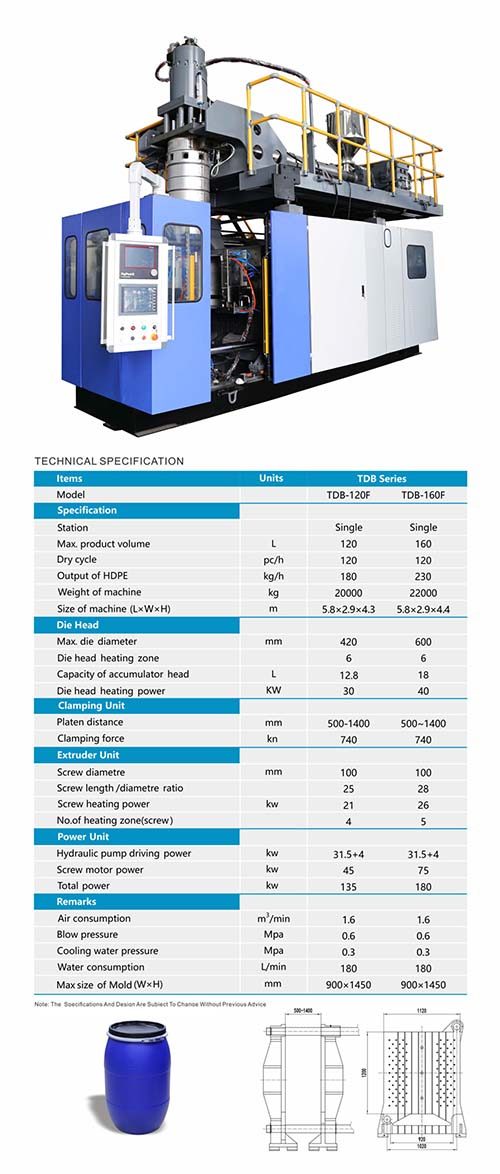
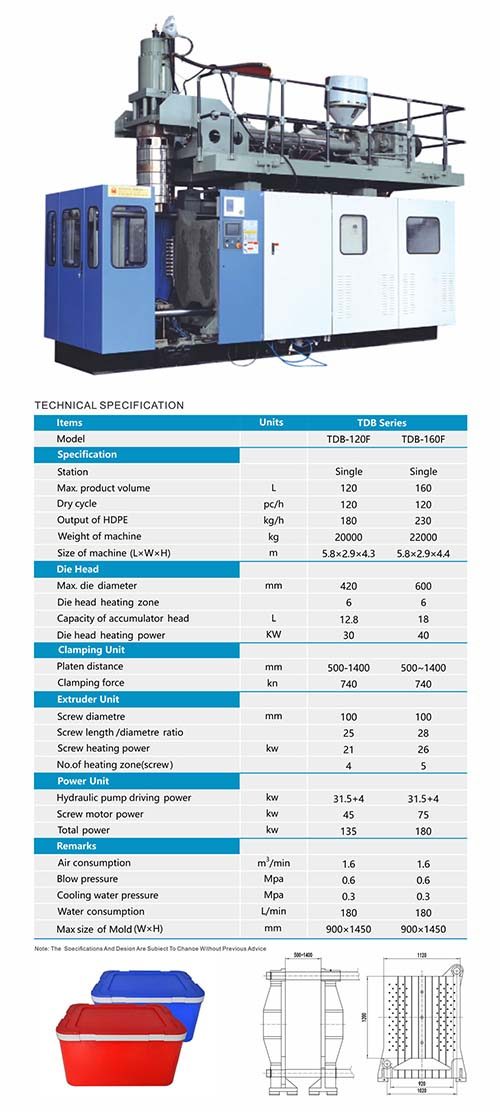
| TDB-120F | Single | 120 L | 740 kN | 100 mm | 131.5 kW | 900 × 1450 mm | PDF · 2.1 MB |
Suggested starting points from the published range. The final configuration depends on your product drawing, resin, weight and output target.
Quotations, prices and project cases: Tongda medium and large hollow part machines on tongdamachine.net ↗
Machine in operation
Watch a Tongda machine producing this type of product, from parison extrusion to the finished part. For a video of a specific model or configuration, ask our team.
More machine videos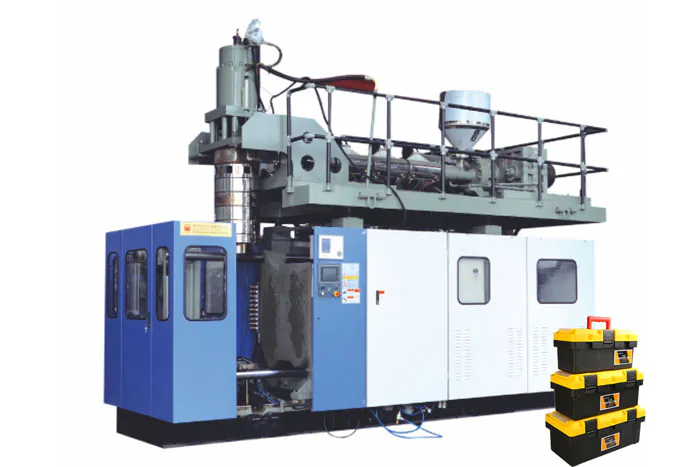
Questions from buyers
Didn't find your answer?
Ask our engineersTDB accumulator-head machines such as the TDB-50F and TDB-80F are the usual starting points. Send the drawing to confirm the platen and mold size.
Yes. Double-wall cases and boxes are a common application; the mold design determines the parting line and wall distribution.
A drawing or sample, part weight, material, required annual quantity and any inserts or finishing steps.
Let's build your next production line
Share your container, material and production requirements. We’ll help you identify a suitable machine configuration.
Discuss your project