Drum volume
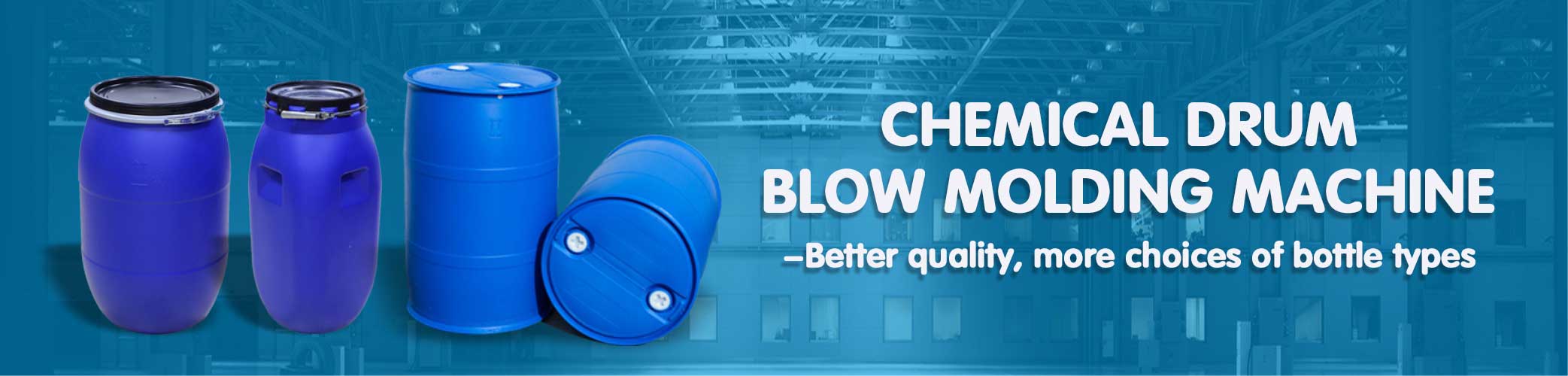
TDB-50F to TDB-250F cover drums from 20 L up to the 200–220 L class.
Manufacture better extrusion blow moulding machines for you.
Industrial containers
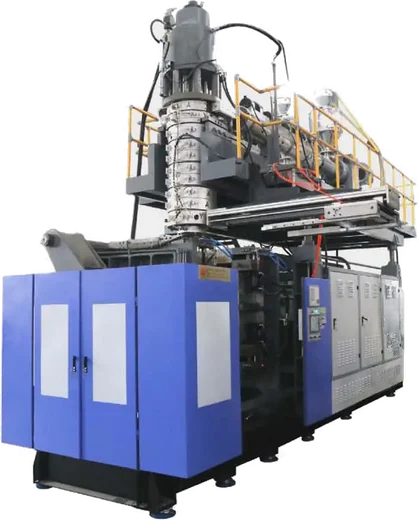
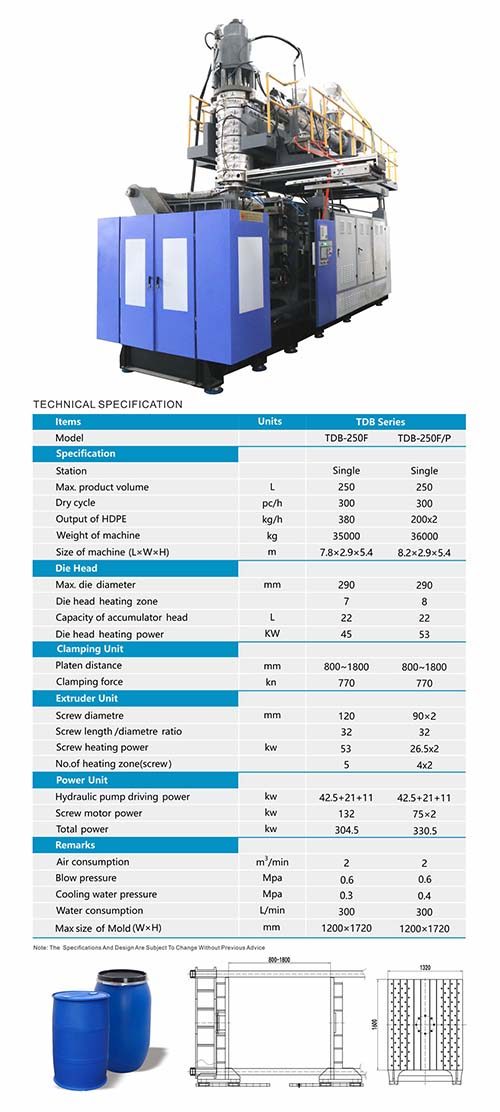
Accumulator-head configurations for single-ring, double-ring and open-top drums from 20 to 250 L, with published specifications side by side.
In short
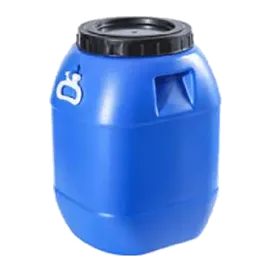
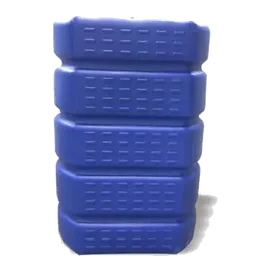
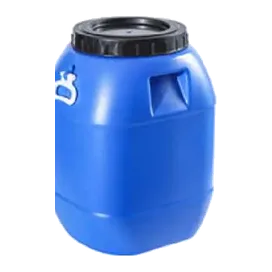
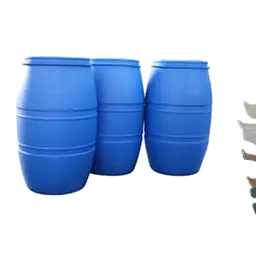
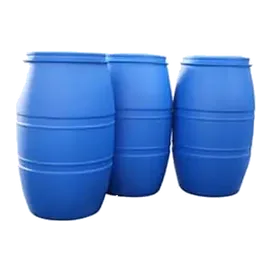
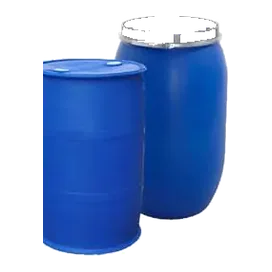
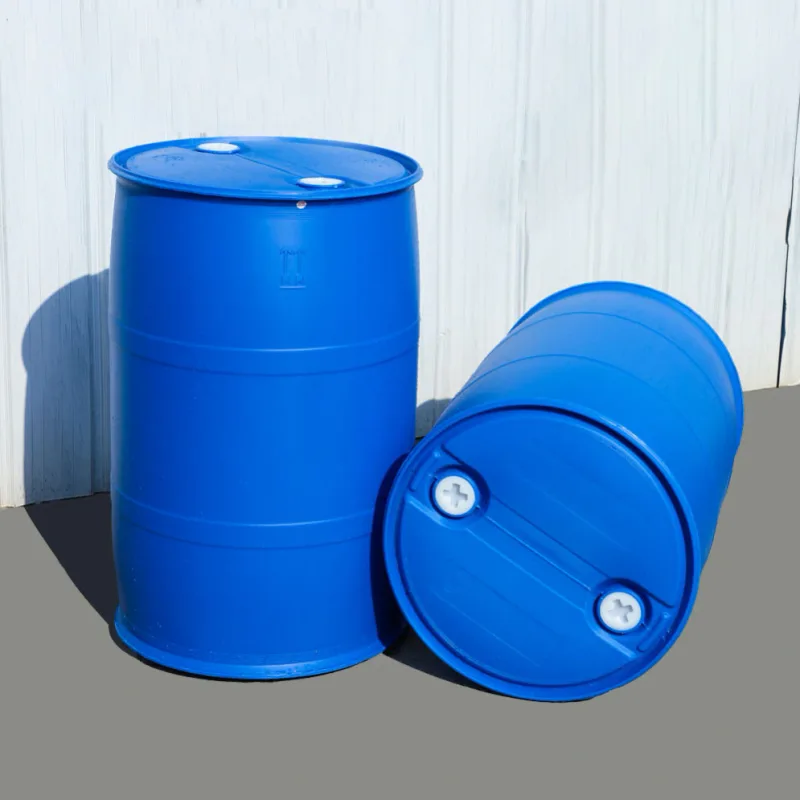
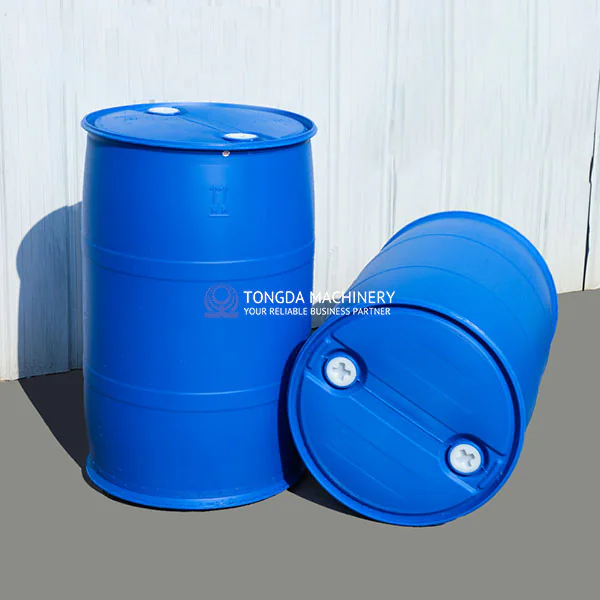
Plastic chemical drums, including closed-head L-ring drums and open-top drums, are blow molded from HMW-HDPE on accumulator-head machines. Tongda’s TDB series covers drums from 20 L to the 200–220 L class, with single- and multi-layer configurations.
The TDB range covers several container sizes. Define the chemical, resin, closure, product weight and handling requirements before selecting a drum machine. Product-specific testing and any transport approvals form a separate part of the container project.
Production process
High-molecular-weight HDPE is dosed with masterbatch for the drum specification.
The accumulator head stores melt so a heavy parison can be pushed out quickly.
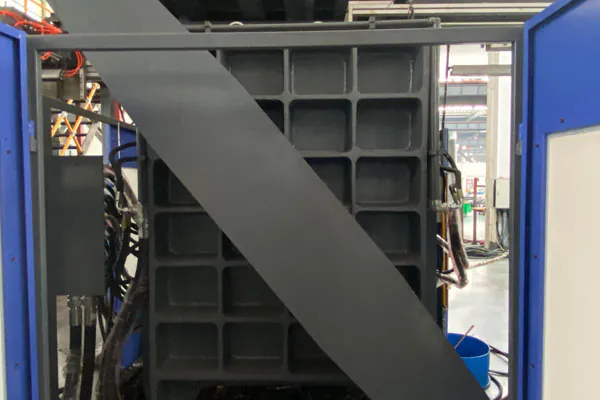
The mold closes and forms the body, L-rings and bungs as the drum is blown.
Large drums need sufficient cooling time to stay dimensionally stable.
Top and bottom flash is removed and the bungs are finished.
Weight, leak and drop tests are carried out to the drum specification.
Selection guide
TDB-50F to TDB-250F cover drums from 20 L up to the 200–220 L class.
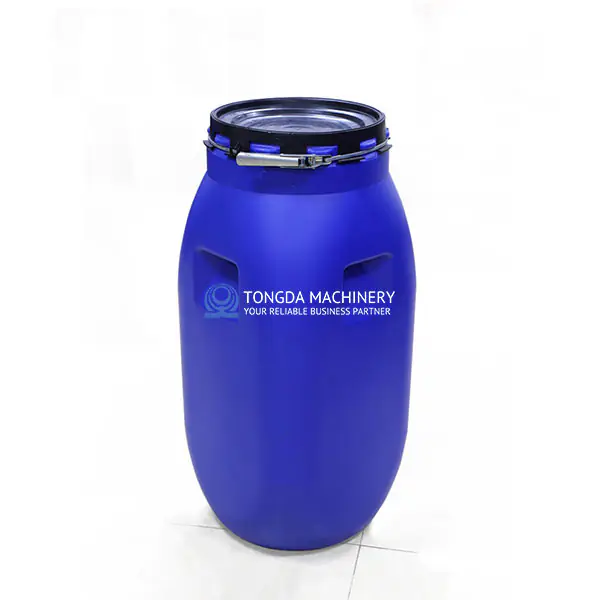
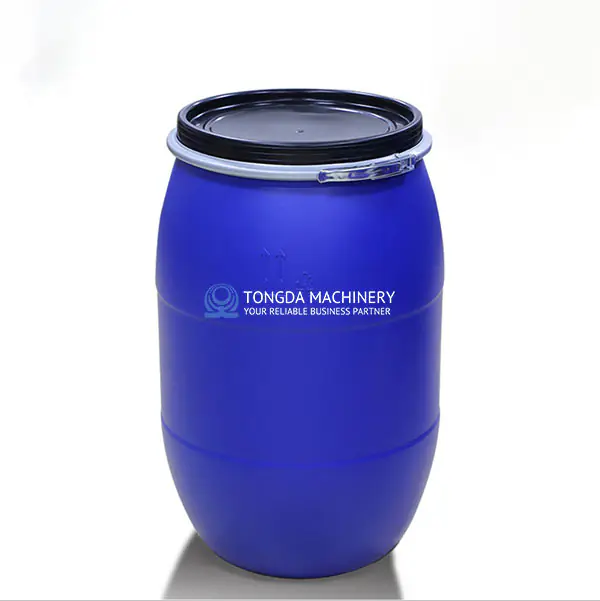
Single-ring, double-ring or open-top designs need different molds and platen sizes.
Single-, double- or three-layer walls change the extrusion and head arrangement.
Product testing and any transport approvals are a separate step for the finished drum.
Machine configurations
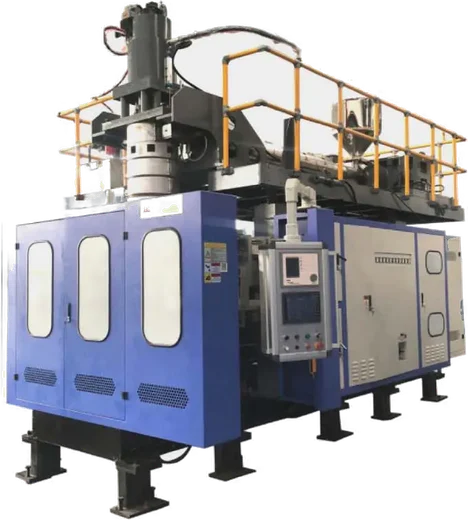
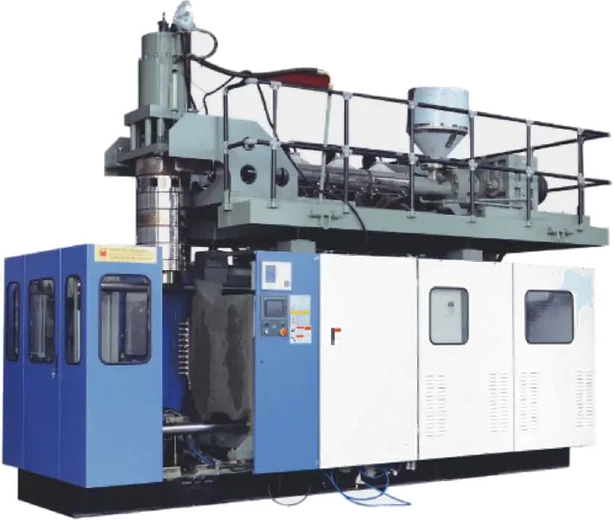
Accumulator-head extrusion blow molding for 20–50 L products, with bottom blowing and a servo motor.
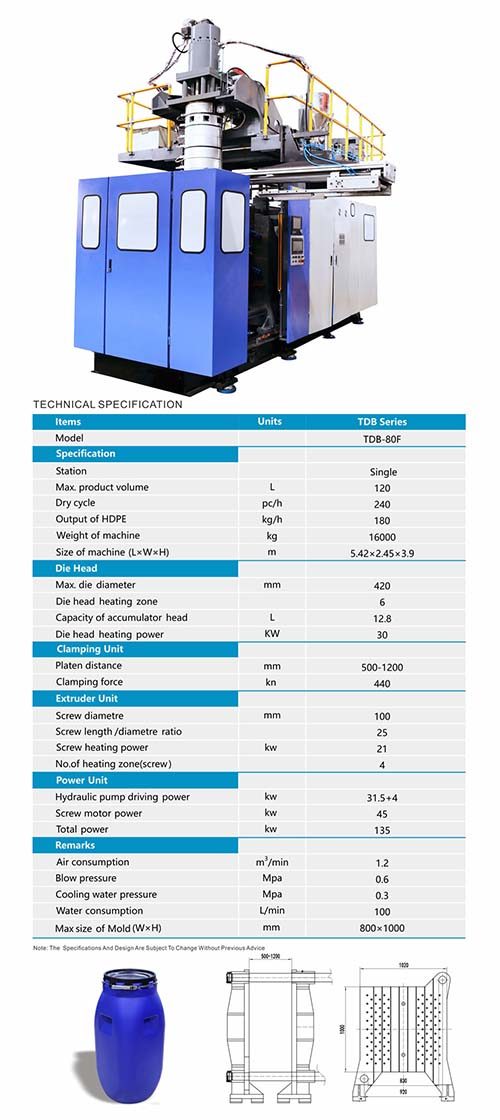
Accumulator-head extrusion blow molding for 80–120 L products, with bottom blowing and a servo motor.
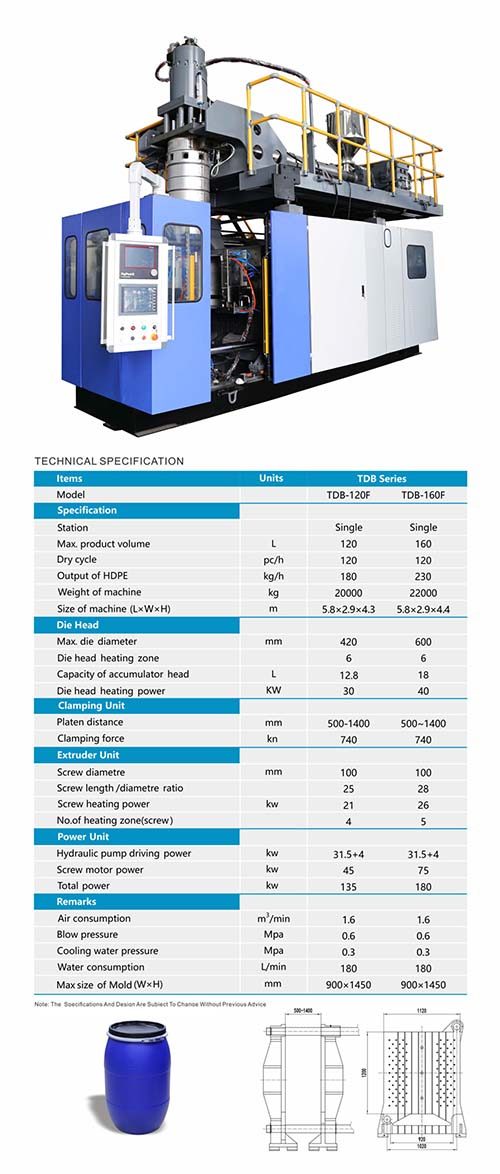
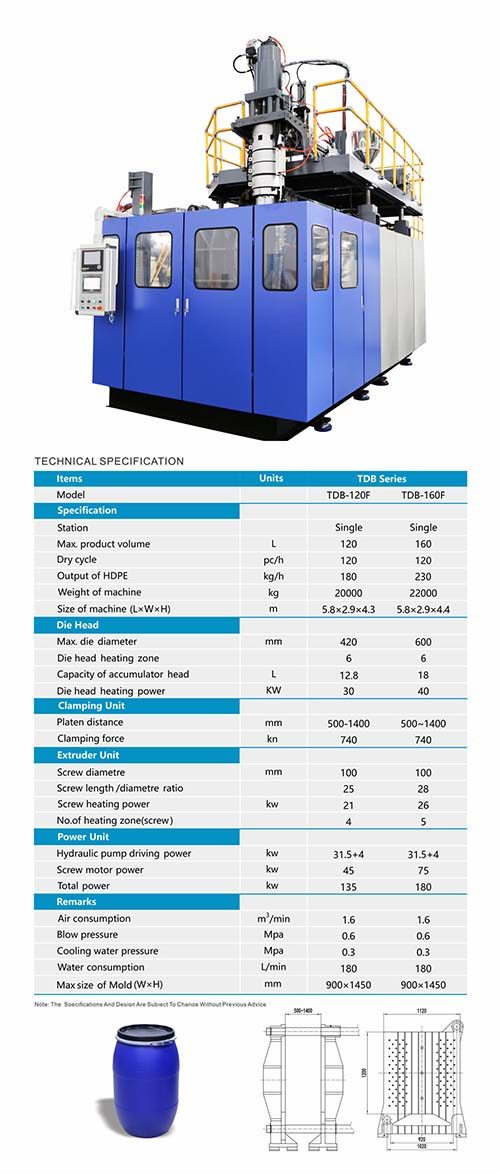
Accumulator-head extrusion blow molding for 120–160 L products, with bottom blowing, servo drive and a larger platen configuration.
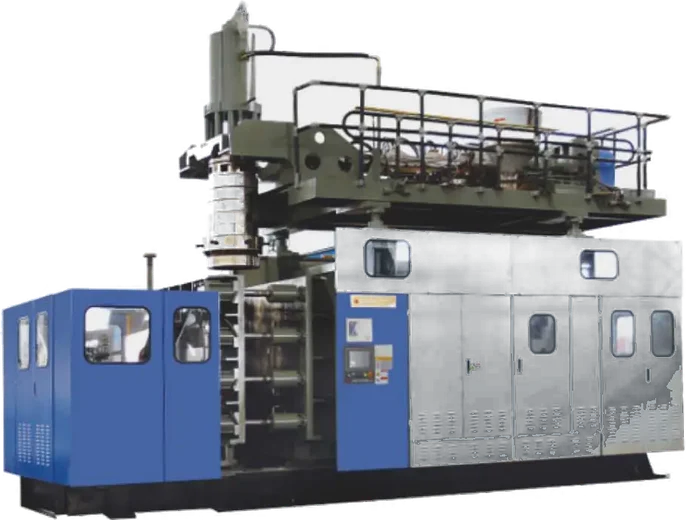
Blow molding for 200–220 L single-ring, double-ring and open-top drums, with a single-layer servo configuration for this model.
| Model | Stations | Max. volume | Clamping force | Screw | Total power | Max. mold (W × H) | Datasheet |
|---|---|---|---|---|---|---|---|
| TDB-50F | Single | 50 L | 260 kN | 90 mm | 103.9 kW | 700 × 950 mm | PDF · 2.2 MB |
| TDB-120F | Single | 120 L | 740 kN | 100 mm | 131.5 kW | 900 × 1450 mm | PDF · 2.1 MB |
| TDB-160D | Single | 160 L | 740 kN | 120 mm | 215 kW | 1000 × 1900 mm | PDF · 2.2 MB |
| TDB-250F | Single | 250 L | 740 kN | 120 mm | 289.5 kW | 1100 × 1600 mm | PDF · 2.1 MB |
Suggested starting points from the published range. The final configuration depends on your product drawing, resin, weight and output target.
Quotations, prices and project cases: Tongda chemical drum machines on tongdamachine.net ↗
Machine in operation
Watch a Tongda machine producing this type of product, from parison extrusion to the finished part. For a video of a specific model or configuration, ask our team.
More machine videos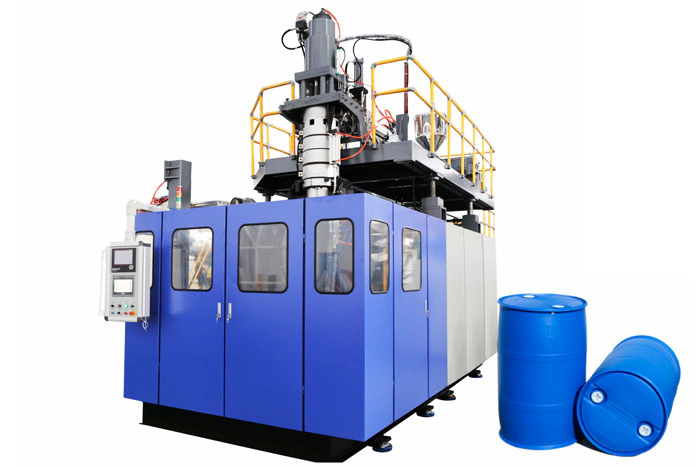
Questions from buyers
Didn't find your answer?
Ask our engineersThe TDB-250F is the reference model for 200–220 L single-ring, double-ring and open-top drums.
The TDB-80F covers 50–80 L products and the TDB-120F covers 80–120 L, both with accumulator heads and bottom blowing.
Approval applies to the finished drum design and its tests, not to the machine. Plan any required certification with your drum design.
Let's build your next production line
Share your container, material and production requirements. We’ll help you identify a suitable machine configuration.
Discuss your project